Rabu, 04 September 2019

Why Fashion Documentaries Are Flourishing - WWD

Over the past few years, drag queens have come to make up more than just a niche community. They are true arbiters of pop culture, masters of camp and lovers of makeup. They are, as Randy Barbato, an executive producer of “Drag Race” and cofounder of World of Wonder Productions, which coproduces RuPaul’s DragCon, put it, “the new pop stars.” A decade after "RuPaul's Drag Race" first premiered, WWD looks back and reports on how queens are finally claiming their rightful crowns (wigs, rather) as beauty leaders. Read more on WWD.com. 📸: @maddiecordoba Report: @alexa_tietjen . . . . . #wwdbeauty #MayhemMiller #Kimora Blac #KameronMichaels #Mariah Balenciaga

Let's block ads! (Why?)


https://wwd.com/fashion-news/fashion-features/fashion-documentaries-flourish-multiply-1203238309/

2019-09-04 04:50:45Z
CBMiYWh0dHBzOi8vd3dkLmNvbS9mYXNoaW9uLW5ld3MvZmFzaGlvbi1mZWF0dXJlcy9mYXNoaW9uLWRvY3VtZW50YXJpZXMtZmxvdXJpc2gtbXVsdGlwbHktMTIwMzIzODMwOS_SAQA

Selasa, 03 September 2019

These maximalist fashion startups are Everlane's splashy cousins - Fast Company

Sick of minimalism? Shop these 5 maximalist fashion startups

Navy sheath dresses have their place, but these second-wave fashion startups prove there’s room for Nigerian prints, vintage Disney T-shirts, and statement socks.

Sick of minimalism? Shop these 5 maximalist fashion startups
[Photos: Diop, Zuri, Yves]

Plain white T-shirts. Monochromatic sneakers. Simple silk dresses.

advertisement
advertisement

When direct-to-consumer fashion brands burst on the scene a decade ago, many specialized in minimalist design. Consider Everlane’s boxy tops and sweaters. Or Allbirds’ ultra-simple wool sneakers. Then there were Outdoor Voices’ color-block workout pants. Or M.M. LaFleur’s clean sheath dresses and suits. If normcore chic is your thing, these brands hit the spot. They made it easy to create a sensible daily uniform in a neutral color palette, so you didn’t have to put too much thought into getting dressed in the morning.

But what if you actually like the act of picking a different outfit every day, or enjoy wearing prints and colors that express your personality? We have good news: A second wave of fashion startups has veered maximalist, offering bold new alternatives with wild prints, flashy colors, and sophisticated textures.

[Photo: Diop]
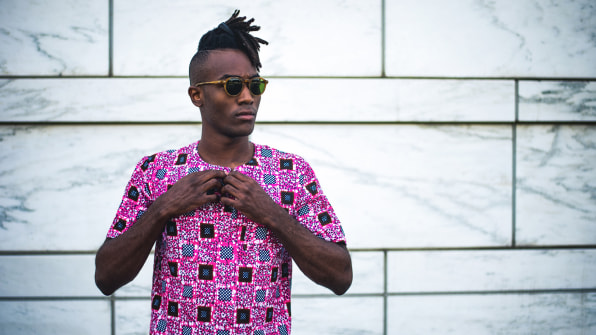
“As fashion entrepreneurs, we really admire what brands like Allbirds and Everlane are doing,” says Mapate Diop, who recently cofounded a fashion brand called DIOP that creates shirts and shorts out of Nigerian Ankara prints. “They changed the game when it comes to transparency and sustainability in fashion, but there are some consumers who really love to use color and patterns in their clothes to express their personality and mood. I know because I am one of them.”

For Everlane and Allbirds, the minimalist aesthetic is related to the brands’ eco-friendly missions. By creating simple, classic garments and shoes, they are rejecting the traditional approach to fashion, which is all about trends, and instead creating outfits that customers can wear day after day, season after season.

Diop, however, makes the case that there isn’t just one approach to sustainable design. “I think making clothes that people truly love and that reflect their identity is a very sustainable approach to fashion design,” says Diop. “If you love something, you’ll wear it again and again. That’s good for the environment.”

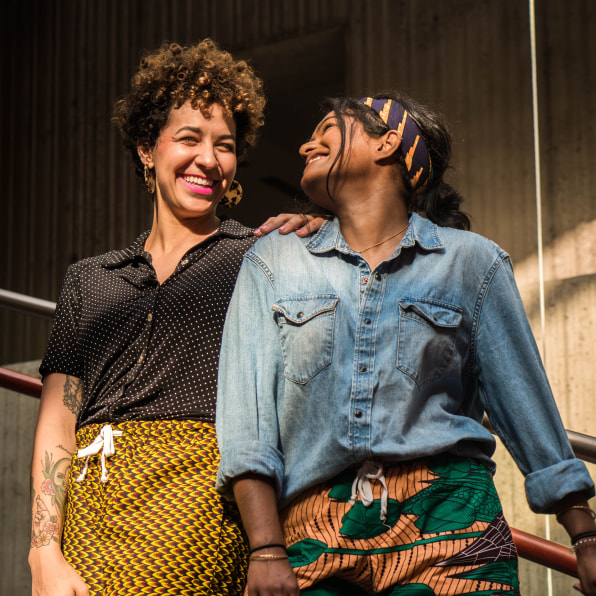
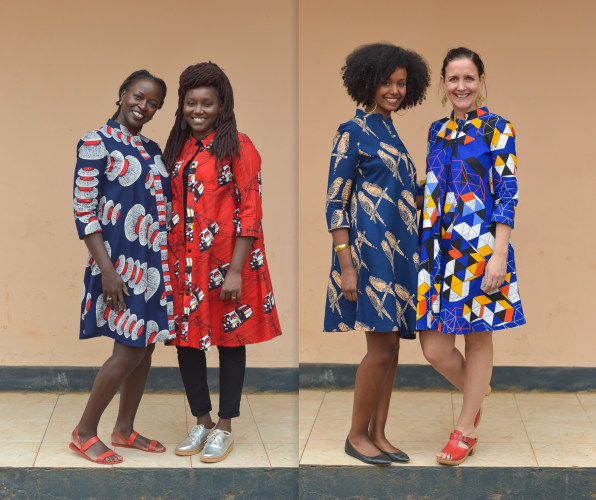
Ashleigh Miller, cofounder of Zuri, which sources its fabrics from East Africa, says uniform dressing, as it’s come to be known, shouldn’t exclude memorable prints or colors. “Rather than having a grey sweater that nobody will notice that you’re wearing it over and over, we’re saying people will notice when you wear this dress,” Miller says. “But we’re trying to tell our customers that there is nothing wrong with wearing the same thing more than once—and there’s nothing wrong with other people noticing that.”

advertisement

To ensure that customers themselves don’t feel bored wearing the same outfit day after day, Zuri garments are designed to be worn in many ways—as a jacket, a dress, and a skirt—so that customers can style it in different ways and get as much use out of it as possible.

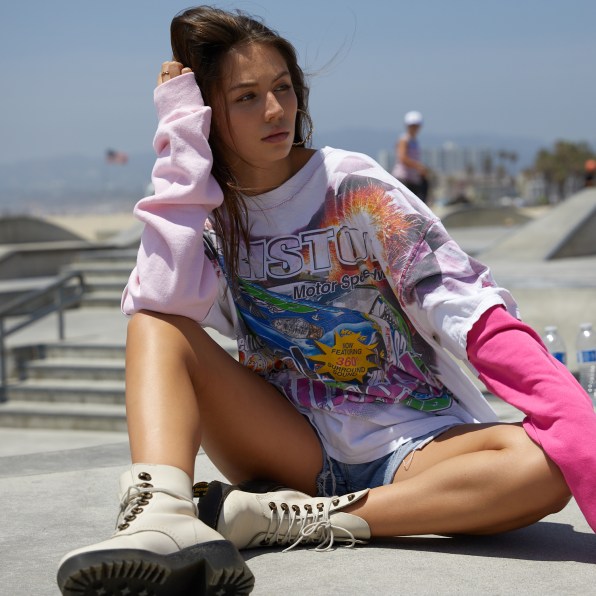
Yves founder Yves Benaroch, meanwhile, creates one-of-a-kind vintage garments from pieces that sport retro logos or prints from other eras. Benaroch carefully salvages these garments and incorporates luxurious touches, like cashmere sleeves or custom embroidery. It’s a way to make a statement about how old garments still have plenty of life. “Many people want clothes that express part of who they are,” says Benaroch. “Some people want a shirt with a vintage cartoon character or a vintage logo from a brand they love. My goal is to create products that speak to people without creating any waste, but rather using clothes already in circulation.”

Since maximalism is having a moment in the world of direct-to-consumer fashion, here’s a rundown of five brands that will help you make a statement—both about sustainability, and your own fashion sense.

[Photo: Diop]

Diop: Nigerian fabulousness

Prices starting at $19

In many parts of the world, including Africa and South Asia, traditional clothing is bright and colorful. Diop describes itself as diaspora-inspired clothing. It sells gender-neutral bandanas, shorts, and tunics that use patterns and prints from Nigeria, where founder Mapate Diop’s family is originally from. These pieces are designed to be worn with Western garments, like jeans and blazers. The brand has been particularly popular among African-American men, but it has found fans of all backgrounds.

[Photo: Yves]

Yves: Luxury vintage

Prices starting at $245

advertisement

While most of us find vintage clothing by digging through piles at Goodwill or going down the eBay rabbit hole, Yves wants us to rethink our approach to vintage fashion. These are not cheap, secondhand pieces that you will throw out after a few wears: They are lovingly crafted garments designed to be worn for years. Designer Yves Benaroch is careful to incorporate iconic logos into clothes that allow people to express parts of their identity, like Army surplus hoodies and Harley Davidson T-shirts.

[Photo: Zuri]

Zuri: Multifunctional frocks

All dresses: $145

Zuri is inspired by prints from across Africa, including East African Kitenge textiles and West African Ankara prints. Traditionally, these prints are designed to communicate messages or commemorate events, like weddings or engagements. As a result, Zuri outfits are extremely expressive, allowing wearers to project personality and mood. The brand recently partnered with Kenyan artist Dennis Muraguri to create its first custom-designed Kitenge print, featuring a bus motif to reflect the local transportation—the matatu—that Kenyans use to move around the city.

The Arrivals: Bold in the cold

Prices starting at $185

In the winter, the streets fill up with people wearing down jackets and parkas, often in neutral colors. The Arrivals wants to give people the option of standing out. They’ve created jackets that come in striking textures and colors, all made from durable materials like leather and wool. Their fall collection features fluffy shearling jackets made from 100% merino that come in many shades, including a soft pink. It is designed to be warm, but also noticeable. You can pair it with the brand’s new line of futuristic sunglasses, which also look entirely original.

[Photo: Stance]

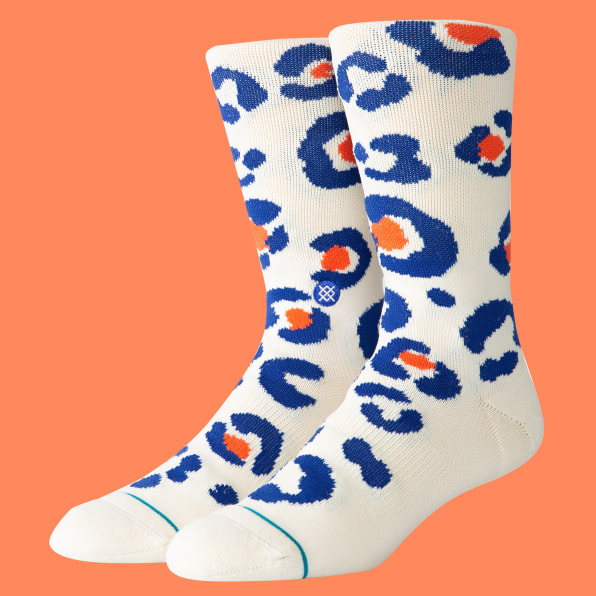
Stance: Statement socks

Prices starting at $12

advertisement

Colorful socks are nothing new. But Stance takes sock design to new places by partnering with artists to create prints that often look three-dimensional. The brand recently collaborated with up-and-coming artist Jenny Sharaf on graphic prints that appear to come alive as they extend across the foot. Skate legend Ishod Wair created skate socks covered in a lively blue leopard print. For times when you can’t go all out with your outfit—like at an investor meeting—these socks say a lot about you as they peek out from under your jeans.

advertisement
advertisement

Let's block ads! (Why?)


https://www.fastcompany.com/90396544/sick-of-minimalism-shop-these-5-maximalist-fashion-startups

2019-09-03 12:00:00Z
CBMiYGh0dHBzOi8vd3d3LmZhc3Rjb21wYW55LmNvbS85MDM5NjU0NC9zaWNrLW9mLW1pbmltYWxpc20tc2hvcC10aGVzZS01LW1heGltYWxpc3QtZmFzaGlvbi1zdGFydHVwc9IBAA

LA Fashion Week (LAFW) October 2019 Designer Lineup Announced - Yahoo Finance

LA Fashion Week (LAFW) returns this October with a jam-packed lineup at the celebrated Petersen Automotive Museum showcasing an exciting line up of talented and innovative international and US-based fashion designers.

LOS ANGELES, Sept. 3, 2019 /PRNewswire-PRWeb/ -- LA Fashion Week (LAFW) returns this October with a jam-packed lineup at the celebrated Petersen Automotive Museum showcasing an exciting line up of talented and innovative international and US-based fashion designers. The Spring/Summer 2020 lineup kicks off with an exclusive invite-only show on October 8th where world-renowned international fashion designer and former Chanel and Givenchy Creative Director, Julien Macdonald, will present a never before seen ready-to-wear Spring 2020 collection.

The five-day week of extraordinary fashion starting October 8 through October 12, includes California's own Coral Castillo, known for her edgy yet feminine fashions, recognized for her work as the winner of this year's Moss Adams Fashion Innovator (MAFI) Award. Castillo's October 11th show is sponsored by Moss Adams', a fully integrated professional services firm dedicated to assisting clients with growing, managing, and protecting prosperity as the presenting sponsor for the evening.

Keeping in line with the mission of LAFW to support cultural diversity in fashion, the Royal Thai Consulate is debuting Thailand's top street wear designers including:

  • Landmee
  • Kanapot Aunsorn
  • Renim Project
  • Salisa Official

Some of the other exciting designers in this season's October LAFW shows include:

  • Luooif Studio (London) – luxury landmark couture brand
  • Inkover (Italy) – streetwear brand embracing minimal yet dynamic designs
  • Adolfo Sanchez (Los Angeles) – brand specializing in evening wear and bridal
  • Bishme Cromartie (Maryland) - recognized for architecturally captivating designs

This season LAFW is receiving support from sponsors including an exclusive bottled water sponsorship from the pioneer of ionized alkaline water in the U.S., Essentia Water, influencer engagement support from legendary LA clothing retailer Fred Segal, accommodations provided by The Hollywood Roosevelt Hotel, one of Hollywood's most iconic luxury and historic hotels, and exclusive VIP gifting products from e-commerce giant, JoyBuy.com.

For more information and full roster of designers please visit http://www.lafw.net or email media(at)lafw(dot)net


Let's block ads! (Why?)


https://finance.yahoo.com/news/la-fashion-week-lafw-october-093000104.html

2019-09-03 09:30:00Z
CBMiSmh0dHBzOi8vZmluYW5jZS55YWhvby5jb20vbmV3cy9sYS1mYXNoaW9uLXdlZWstbGFmdy1vY3RvYmVyLTA5MzAwMDEwNC5odG1s0gFSaHR0cHM6Ly9maW5hbmNlLnlhaG9vLmNvbS9hbXBodG1sL25ld3MvbGEtZmFzaGlvbi13ZWVrLWxhZnctb2N0b2Jlci0wOTMwMDAxMDQuaHRtbA

How Fast Fashion Is Destroying the Planet - The New York Times

FASHIONOPOLIS
The Price of Fast Fashion and the Future of Clothes
By Dana Thomas

There is that old saying, usually attributed to Yves Saint Laurent: “Fashion fades, style is eternal.”

Literally speaking, that actually may no longer be true, especially when it comes to fast fashion. Fast-fashion brands may not design their clothing to last (and they don’t), but as artifacts of a particularly consumptive era, they might become an important part of the fossil record.

More than 60 percent of fabric fibers are now synthetics, derived from fossil fuels, so if and when our clothing ends up in a landfill (about 85 percent of textile waste in the United States goes to landfills or is incinerated), it will not decay.

Nor will the synthetic microfibers that end up in the sea, freshwater and elsewhere, including the deepest parts of the oceans and the highest glacier peaks. Future archaeologists may look at landfills taken over by nature and discover evidence of Zara.

Image
CreditValerio Mezzanotti for The New York Times

And it is Zara and other brands like it that have helped plant flags on the farthest reaches of the planet. In “Fashionopolis,” Dana Thomas, a veteran style writer, convincingly connects our fast-fashion wardrobes to global economic and climate patterns and crises, rooting the current state of the fashion biosphere as a whole — production methods, labor practices and environmental impacts — in the history of the garment industry.

Her narrative is broken up into three manageable sections. The first focuses on today’s global fast-fashion and regular fashion industries and how they came to be so enormous, voracious, so seemingly uncontainable. It includes a fascinating account of how NAFTA made possible the international success of fast fashion. The second presents alternative, even opposite, approaches to making clothing that Thomas terms “slow fashion”: locally grown materials, often domestically manufactured or sourced on a relatively small scale, like the farmer and entrepreneur Sarah Bellos’s American-grown indigo. Lastly, she meets people who are trying to reform the system entirely, from the materials we use to how clothes are produced and the ways we shop.

Throughout, Thomas reminds us that the textile industry has always been one of the darkest corners of the world economy. The defining product of the Industrial Revolution, textiles were crucial to the development of our globalized capitalist system, and its abuses today are built on a long history. Slave labor in the American South supplied factories in both England, where they were notorious for child labor and other horrors, and the United States, where factory fires took the lives of recent immigrants at the turn of the 20th century. Thomas reports that there are immigrant workers in Los Angeles today who are victims of wage theft and exploitation, not to mention the Bangladeshi, Chinese, Vietnamese and other laborers who face working conditions that are at best grim and at worst inhumane. Fashion is an industry that has depended on the toil of the powerless and the voiceless, and on keeping them that way.

In one of the most powerful parts of the book, Thomas recounts the tragedy of the 2013 Rana Plaza factory collapse in Bangladesh, told through the harrowing experiences of two survivors. The explosion killed 1,100 people and injured another 2,500. And this was not a one-off: “Between 2006 and 2012, more than 500 Bangladeshi garment workers died in factory fires.” And, she notes, none of this news — the Rana Plaza catastrophe was widely covered — diminished Americans’ appetites for cheap clothing. In fact, Thomas writes, that same year Americans “spent $340 billion on fashion,” and “much of it was produced in Bangladesh, some of it by Rana Plaza workers in the days leading up to the collapse.”

Not all of the book is this pessimistic: There is plenty of bubbliness and glamour for fashion lovers to get excited about. Thomas displays her skills as a culture and style reporter as she visits the visionaries who are attempting to remake the industry, if not from whole cloth, then maybe from lab-grown or recycled fibers of some kind. She conjures a pastoral idyll, for instance, in her depiction of the designer Natalie Chanin and her business, Alabama Chanin, a line of cotton clothing produced almost entirely in Florence, Ala., once the “Cotton T-Shirt Capital of the World.” In Thomas’s telling, these garments are both environmentally sustainable and humane, though with a revenue of just over $3 million last year, the 30-person company is no replacement for mass production when it comes to dressing seven billion people.

Image
CreditTomas Munita for The New York Times

Among the book’s delights are Thomas’s sketches of her individual subjects. I can’t get her description of a woman as “peaches-and-cream pretty” out of my head; I know exactly what she looks like. The author also has a gift for bringing luxury to life: She conjures Moda Operandi’s London showroom so vividly that I felt as though I’d moved in.

In the last section, Thomas marvels at the ingenuity of those trying to “disrupt” fashion. She makes a strong argument for the importance of science applied to (what are often seen as) the frivolities of fashion, especially if we want to move away from the unartful excesses of mass production.

Stella McCartney gets a disproportionate amount of attention here, and for good reason. McCartney has long been committed to sustainable practices, in her own business and others’. As the head designer at Chloé in the late 1990s, she refused to include leather or fur in her collections, which many executives then considered a death wish (some still do). She made it work, and has amplified those practices in her eponymous company, using, for instance, only “reclaimed” cashmere, refusing to use polyvinyl chloride or untraceable rayon.

However, it is in contextualizing this single industry from a broader climate perspective that the book falls short. Some statistics are exaggerated: Livestock are not responsible for “at least half of all global greenhouse gas emissions,” but rather closer to 15 percent of them; nor is fashion production alone consuming water at a rate that, if maintained, “will surpass the world’s supply by 40 percent by 2030” (not even the world’s total water demand necessarily will). And much of the discussion of new materials and production methods raises further questions. What are the differences between organic, conventional and “Better Cotton”? (Organic cotton is periodically touted as a sustainable alternative, though it currently makes up only about 0.4 percent of the cotton market, making it nearly impossible for any company to rely on now or in the near future.) Another: Does the landfilling of non-synthetic clothing matter? Thomas doesn’t say, but in fact it does, because it contributes to global emission of methane, a potent heat-trapping gas.

A lot of faith is placed here in the idea of “a circular — or closed-loop — system, in which products are continually recycled, reborn, reused. Nothing, ideally, should go in the trash.” But the practical considerations — cost, efficiency, resource limitations — are often left unaddressed. Ultimately, Thomas finds that renting clothing is the most sustainable model, and that feels like a more realistic solution than the futuristic materials she describes at length. In the end I was left wondering: If the fashion industry is this damaging, and none of these developments alone will fix the problem, shouldn’t governments be regulating production beyond enacting stricter pollution standards?

That may be a question for another book; it is not the goal of “Fashionopolis” to provide all the answers. Thomas has succeeded in calling attention to the major problems in the $2.4-trillion-a-year industry, in a way that will engage not only the fashion set but also those interested in economics, human rights and climate policy. Her portraits of the figures who are transforming a field that hasn’t changed all that much in the last century or more sound at once like messages from the future and like nostalgic reveries of life in a smaller, simpler world. If we can combine them, this book suggests, the envisioned “fashionopolis” could transform from an urban nightmare into a shining city on a hill.

Let's block ads! (Why?)


https://www.nytimes.com/2019/09/03/books/review/how-fast-fashion-is-destroying-the-planet.html

2019-09-03 09:00:00Z
CAIiEOyyCQ0G9BNv7cBHIfIp_BkqFwgEKg8IACoHCAowjuuKAzCWrzww14QY

Melbourne fashion week's first modest runway show – in pictures - The Guardian

[unable to retrieve full-text content]

Melbourne fashion week's first modest runway show – in pictures  The Guardian

Mod Markit Runway is a fashion show dedicated to presenting new looks to fashion lovers from diverse backgrounds and cultures. The first modest show at ...


https://www.theguardian.com/fashion/gallery/2019/sep/03/melbourne-fashion-weeks-first-modest-runway-show-in-pictures

2019-09-03 06:16:00Z
CBMidGh0dHBzOi8vd3d3LnRoZWd1YXJkaWFuLmNvbS9mYXNoaW9uL2dhbGxlcnkvMjAxOS9zZXAvMDMvbWVsYm91cm5lLWZhc2hpb24td2Vla3MtZmlyc3QtbW9kZXN0LXJ1bndheS1zaG93LWluLXBpY3R1cmVz0gEA

Senin, 02 September 2019

Back to school: ten tests for the fashion business - MDS

New period in fashion: ten tests for the bad student of the class

Fashion swims in deep waters. As one of the most globalized industries thoughout its entire supply chain, from spurcing to distribution, fashion starts a new period marked by macroeconomic challenges.

At the same time, fashion business will face its own challenges the next couple of months, from the model crisis the sector is going though to the changes in consumption. With ten key elements on the table, fashion has become the bad student of the class.

Consumption, shaking

Fashion consumption stopped increasing, at least at the pace it used to. In 2018, the global fashion business reached a revenue of 1.8 billion dollars, according to Euromonitor. One year earlier, in 2017, it grew to 1.7 billion dollars, an increase of 4% compared to the previous year. Last projections of Euromonitor assure that the sector will reach a global business of 2 billion dollars in 2023.  

During the last couple of years, global consumption has destabilized because of macroeconomic and political issues, and fashion was one of the most affected sectors. Besides, the fact that the most important product category for the industry, womenswear, has stopped growing in the developed economies (Europe and United States) this has affected the global revenue.

What will happen in the next couple of months? With more political uncertainties than ever (Like the Brexit or the trade war), Chinese economy slow down, a consumer that has changed its way of buying and the threat of a new crisis, fashion consumption stated shaking. And companies see it coming.

Fashion is no longer welcomed  

There was a time when investors and financial entities saw fashion companies as its star clients. Even though that time is not that far, it's long gone, and has fashion stopped being welcomed in banks and the portfolios of the biggest investment groups of the world.

The risk is high. Fashion is a system that depends on consumption. That said, when the economy started its recovery from the economical global crisis of 2007, the sector was one of the first that benefit. Now, with consumption dropping, the risk associated with fashion is high.

A big number of European and American companies just finished or are in the middle of refinancing process, from Spanish El Ganso, to American Forever21. How will this affect the sector is yet to be see.

A less global fashion? In the brick and mortar, yes

It´s the moment to withdraw and re-center in safer and more profitable markets on short term. At least that that is what some companies of the sector have strated to think, they are starting to close their international stores after years on the rise overseas. 

After the retreat of fashion groups from Russia, Brazil or China, the turn has arrived for markets like United Kingdom and The Netherlands. El Ganso and Scalpers are two examples, the Spanish brands decided to withdraw its physical presence and focus in the online channel.

After a direct impact in the countries with an over dimensioned structured, the retail apocalypse arrives now at markets with weaker presence and the brick and mortar leaves the online bet to make its move.

The challenge of the margin online 

What if the cheap delivery open bar finishes for the package companies? This possibility, that has been placed on the table by the logistics giants, becomes a threat for the already weakened margins of the fashion delivery groups.

Logistics companies have started to raise its prices because of the impact of ecommerce in its results. In the last couple of months, companies like DHL have warned over the necessity of restructuring its operations due to lowest results than expected, same as FedEx, UPS or Royal Mail.

Fashion distribution hasn’t take long trying to avoid the impact in its margins. H&M, for example, announces in April a minimum range for free deliveries in its ecommerce platform. Asos and Zalando are using similar measures. The British company updated its returns politics to avoid massive returns and Zalando added minimum order price in Italy.

What if fashion is no longer purchased?

 Second-hand (with operators that modernize the segment like Wallapop or Vinted) opens the door for new business models. Rental and subscription become stronger in the sector and these new players are making its way up the fashion rankings. What impact will this have in the fast pace of the sector? In need of volume and repetition so the model works?

Bridal rental services moved in 2017 around 1 billion dollars and its estimated that by 2023 the number will arrive at 1.8 billion dollars. The main booster of this segment is North America that represents 40% of the business according to the Online Clothing Rental Market: Global Opportunity Analysis and Industry Forecast, 2017-2023 report, elaborated by Allied Market Research.

In August, the rental and subscription business had a busy month. The giant Hudson’s Bay, for example, sold Lord&Taylor to Le Tote (specialized in providing its users with monthly boxes of items that can be returned after used) for 100 million euros. Nike, on the other hand, introduced its sale by subscription in its children footwear and Gap launched the Style Passport program, that will offer the rental of three garments a month for a fixed price of 85 dollars per month.

The temptation of promotions

If there has been a constant in the fashion business since the economic crisis is the promotions. Ahead of the reduction in the consumers purchasing power and the development of low-cost players like Primark, the sector reacted with 2X1 or 50% off sales.

While markets like the United States were used to a permanent sales season, other countries have fallen deep into the last decade of promotions, while campaigns like Black Friday keep popping up.  

In countries where competition is particularly high, (like Spain, where Inditex is king), sale season and promotions have been strong. This has caused a reduction in the price per unit of the garments. But, with the recovery of fashion consumption, and the average price started to rise, but instability in consumption and the threat of a new crisis make the temptation too big. Will companies fall back into sales season and promotions, or will they stay away from this loved and hated policy?

Courts around the corner

Chapter 11, bankruptcies, dismissals and refinancing are again the center of the fashion headlines. The high retail prices in distribution companies and the drop of sales are some of the elements that may lead the sector into a new wave of crisis.

One of the last companies to join this tread is Forever21. The American retailer is about to file for Chapter 11 to restructure its debt. If the company doesn’t achieve this, it will enter the courts.

Lose the focus on sustainably  

 Even if sustainability is the latest word in the fashion vocabulary, and it's present in all the speeches about the future of the sector, some of the opinion leaders started to forecast a light softening in the sustainable bets of the companies. 

“Fashion companies are not implementing sustainable solutions fast enough to counterbalance the negative environmental and social impacts of the rapidly growing fashion industry,” stated the Global Fashion Agenda Report created by the Sustainable Apparel Coalition (SAC) and The Boston Consulting Group.  “If the industry does not implement changes at a faster rate, it will not be able to achieve the United Nations Sustainable Development Goals or meet the Paris Agreement”, added.

New balance in stock

The trade war between United States and China has caught up with raw materials, textiles, fabrics and confection garments, rising alarms in the American fashion companies, that continue to focus the Asian giant as a big part of its stock supply. Companies like PVH, Abercrombie&Fitch or Nike, already stated that they will rethink its supply strategies.

The cheap production cost in Asia reached its limits. Investments made by the industry in Bangladesh in terms of security and sustainability leave a shot margin to continue pushing the low. On the other hand, minimum wages in these countries and in the ones around it continue to increase.

Ethiopia and Myanmar, projected for years as the next sites for low cost, are not arriving at the point the companies desire. The lack of infrastructure in the territories puts a brake in this while the political instability of the region also makes its harder to invest.

Finally, uncertainty generated by the trade war between the two economic giants and the increase of protectionism is taking its turn in emerging markets. The Chinese yuan is being one of the most penalized, with its worse number in more than 25 years.

Put fashion back in trend  

But, at the end, all challenges end up in bigger one: to put fashion back in trend. During the last couple of years, fashion has lost its sparkle in the eyes of the consumers all around the world, specially in developed economies.

Categories like restorations, travel and communications have earned more and more range in the home expenses, at the same time fashion has decreased.  Consumers are looking more and more for experiences, and fashion stopped being one.

Facing the threat of a new economy brake and a consumer that is every time more aware of what its expenses, fashion is running against the clock to go back in trend. Otherwise, how much more will sales drop and how many more companies will be left behind?

Let's block ads! (Why?)


https://www.themds.com/companies/back-to-school-ten-tests-for-the-fashion-business.html

2019-09-02 07:09:14Z
CBMiV2h0dHBzOi8vd3d3LnRoZW1kcy5jb20vY29tcGFuaWVzL2JhY2stdG8tc2Nob29sLXRlbi10ZXN0cy1mb3ItdGhlLWZhc2hpb24tYnVzaW5lc3MuaHRtbNIBAA

Minggu, 01 September 2019

"Si Jolie!" fashion exhibit explores Paris - cleveland.com

Si Jolie! New fashion exhibit explores Paris-Cleveland relationship in high style (photos)

Laura DeMarco, The Plain Dealer

Si Jolie! New fashion exhibit explores Paris-Cleveland relationship in high style (photos)

Plain Dealer Historical Photograph Collection: Musee d'Orsay in Paris

WRHS/Cleveland History Center: Evening Dress, ca. 1900. Jeanne Paquin

Plain Dealer Historical Photograph Collection: Higbee's 1931

WRHS/Cleveland History Center: Evening Gown, ca. 1940. Attributed to Elsa Schiaparelli

Let's block ads! (Why?)


https://expo.cleveland.com/life-and-culture/g66l-2019/09/f020a0f5922865/si-jolie-fashion-exhibit-explores-pariscleveland-connection-in-high-style-photos.html

2019-09-01 09:13:36Z
CBMinQFodHRwczovL2V4cG8uY2xldmVsYW5kLmNvbS9saWZlLWFuZC1jdWx0dXJlL2c2NmwtMjAxOS8wOS9mMDIwYTBmNTkyMjg2NS9zaS1qb2xpZS1mYXNoaW9uLWV4aGliaXQtZXhwbG9yZXMtcGFyaXNjbGV2ZWxhbmQtY29ubmVjdGlvbi1pbi1oaWdoLXN0eWxlLXBob3Rvcy5odG1s0gEA